
How to Ask and Get Good Customer Reviews for Travel Business is an important strategy for travel companies that want to build trust, attract more travelers, and increase bookings.
A traveler’s journey does not end when they return home.
For a travel business, what happens after the trip can become one of the most valuable parts of building trust and growing bookings. A happy traveler can become a repeat customer, recommend your service to others, share their experience online, and leave a review that helps future travelers choose your business.
But many travel businesses face the same problem.
Customers enjoy their trip. They appreciate the service. They may even tell you personally that they had an amazing experience.
But when it comes to writing a review, many of them never do it.
Why?
Not because they are unhappy.
Most of the time, they simply forget.
After returning from a trip, people go back to their daily routine. The excitement of the journey slowly becomes a memory, and leaving a review becomes less important.
This is why having a proper strategy for getting customer reviews for your travel business matters.
Reviews are not just online comments. They are trust signals that influence how travelers make booking decisions.
Before choosing a travel company, people want answers:
- Can I trust this company?
- Did previous travelers have a good experience?
- Is the service really worth the money?
- Will this company support me during the journey?
Customer reviews answer these questions through real experiences.
A beautiful website and attractive tour packages can bring visitors, but reviews help turn those visitors into customers.
In this guide, we will explain how to get customer reviews for your travel business, how to ask for them naturally, how to handle negative feedback, and how to use reviews to increase bookings.
1. Why Customer Reviews Matter for Your Travel Business
Travel is not like buying a normal product.
When someone purchases a product, they can usually see what they are getting. But when someone books a tour, they are investing in an experience.
They are trusting your business with their:
- Time
- Money
- Safety
- Holiday memories
Because of this, trust becomes one of the biggest factors in travel decisions.
A traveler visiting your website for the first time may see beautiful destinations, professional photos, and detailed itineraries.

But they may still hesitate.
Reviews help remove that hesitation.
A real traveler sharing:
“Everything was organized smoothly, the guide was helpful, and the experience was unforgettable”
creates more confidence than a simple marketing statement.
That is why customer reviews for travel businesses are powerful. They show potential customers that your company has already created positive experiences for others.
1.1 Build Trust With New Travelers
A new customer does not know your travel company.
They do not know your team, your communication style, or how you handle unexpected situations.
Reviews give them a better understanding of what working with you feels like.
When people read experiences from previous travelers, it feels like they are getting advice from someone who has already completed the journey.
This reduces uncertainty.
And when uncertainty decreases, booking confidence increases.
1.2 Increase Booking Confidence
Many travelers compare multiple travel companies before making a final decision.
Two companies may offer similar destinations and packages.
But the one with genuine customer feedback usually feels more reliable.
Positive reviews can help increase:
- Website trust
- Customer inquiries
- Tour bookings
- Brand reputation
Your travel service may already be excellent, but without reviews, many people may never know.
1.3 Improve Your Travel Business Reputation
Your online reputation plays a major role in attracting new travelers.
A travel company with many positive reviews looks more established and trustworthy.
Over time, reviews become a long-term marketing asset.
They continue working for your business even when you are not actively promoting your tours.
1.4 Understand Customer Expectations Better
Reviews are not only useful for attracting customers.
They also help you understand what travelers actually value.
Customers may highlight things like:
- Friendly guides
- Quick communication
- Easy booking process
- Well-planned itineraries
- Excellent support
These insights help you improve your service.
Negative reviews can also show areas where your business needs attention.
Every review gives you information that can help create better experiences.
2. Understand Your Customers Before Asking for Reviews
Before asking customers for reviews, understand who they are.
Different travelers have different expectations and different reasons for sharing feedback.
A family traveler may talk about safety and comfort.
An adventure traveler may share exciting moments and challenges.
A luxury traveler may focus on personalized service.
When you understand your audience, your review request feels more natural.
Instead of sending the same message to everyone:
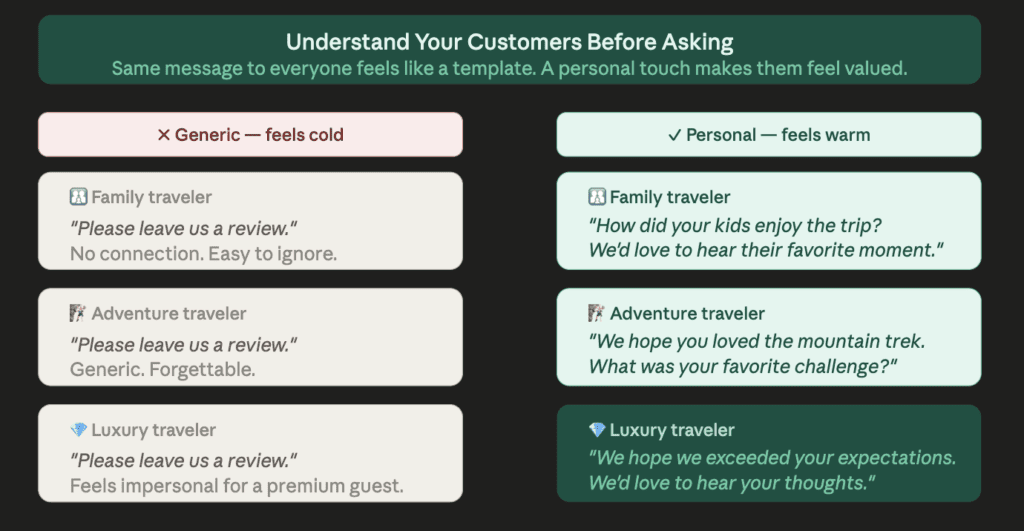
“Please leave us a review.”
You can create a personal connection:
“We hope you enjoyed your mountain adventure. We would love to know your favorite moment from the journey.”
A small personal touch can make customers feel valued.
2.1 Identify Different Types of Travelers
Knowing your customer type helps you choose the right approach.
Adventure Travelers
They often enjoy sharing:
- Photos
- Stories
- Challenges
- Achievements
A social media request may work well for them.
Family Travelers
They usually care about:
- Safety
- Comfort
- Smooth planning
A personal email after the trip can work better.
Luxury Travelers
They often appreciate personalized communication and attention.
A direct message from your team may create a stronger response.
2.2 Personalize Your Review Request
Personalization makes your message feel human.
Mention details like:
- Customer name
- Destination
- Tour name
- Special moments
For example:
“We hope your Annapurna trip created unforgettable memories. We would love to hear about your experience.”
This feels much better than a generic message.
3. Prepare Your Travel Business Before Asking for Reviews
Many travel businesses start asking for reviews without preparing the right system.
Before requesting feedback, make sure customers have an easy place to leave reviews.
Create profiles on platforms where travelers already search for information.
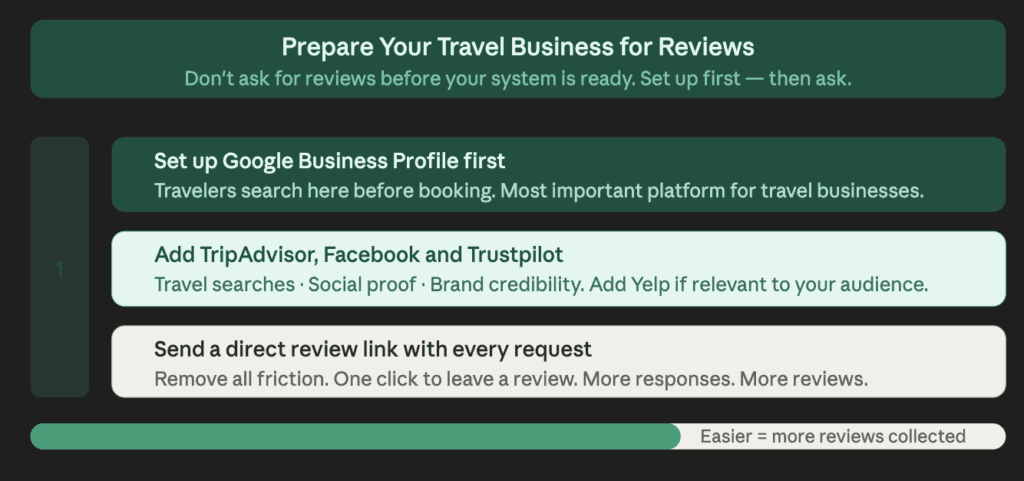
Important platforms include:
- Google Business Profile
- TripAdvisor
- Trustpilot
- Yelp (depending on your audience)
The easier the process is, the more reviews you can collect.
One of the most important places to collect customer feedback is your Google Business Profile, where travelers can find your business information, photos, and reviews before making a decision.
Link:
Google Business Profile
https://www.google.com/business/
3.1 Create Profiles on Popular Review Platforms
Different travelers prefer different platforms.
Some customers trust Google reviews.
Others check TripAdvisor before booking travel experiences.
Having a presence on multiple platforms increases your chances of being discovered.
3.2 Make the Review Process Simple
A complicated review process reduces responses.
Avoid making customers:
- Search your company
- Find the correct profile
- Navigate through multiple pages
Instead:
- Send direct links
- Add QR codes
- Provide clear instructions
The easier it is, the more likely customers will complete the review.
4. Find the Best Time to Ask Customers for Reviews
Timing can make a big difference.
The best moment to request a review is when customers are still connected to their travel experience.
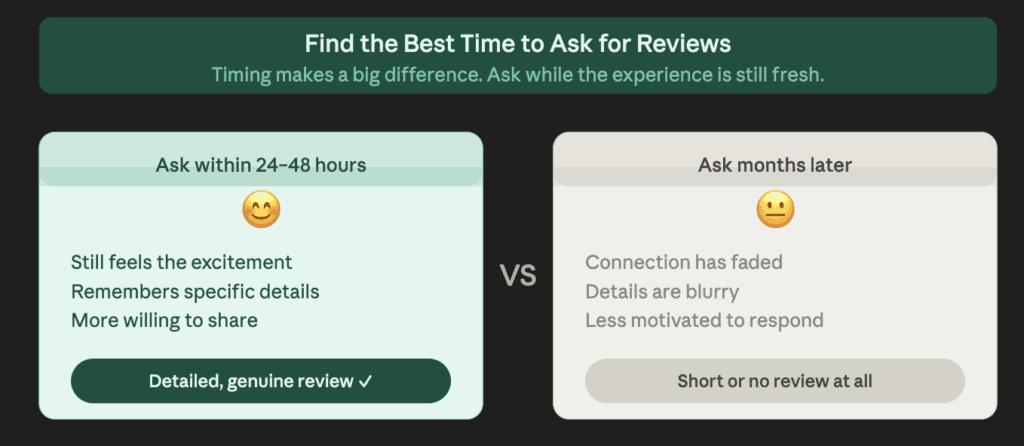
A traveler who just completed an amazing trip is more likely to share details than someone contacted months later.
4.1 Ask After Completing a Successful Trip
After the journey ends, customers usually remember the best moments.
This is the perfect opportunity.
Example:
“We are happy that you enjoyed your trip with us. Your feedback helps other travelers plan their journey, and we would appreciate your review.”
4.2 Ask When Customers Share Positive Feedback
If a customer messages:
“Thank you, we had a wonderful experience.”
That is already a sign of satisfaction.
Use that moment.
A review request feels natural because they already shared positive feedback.
4.3 Ask After Customers Share Travel Photos
When travelers share photos from your tour, they are already engaging with their experience.
A simple message can encourage them to share their full story.
5. How to Ask and Get Good Customer Reviews for Travel Business
Personal conversations can be one of the most effective ways to get customer reviews for your travel business.
Travel is a relationship-based industry. During a trip, customers interact with your guides, support team, and travel coordinators. These interactions create trust and emotional connection.

When customers are happy with their experience, a simple and friendly request can encourage them to share their thoughts.
However, the way you ask matters.
Customers should not feel like they are doing a favor for your business. They should feel that their experience is valuable and can help other travelers.
Instead of saying:
“Please give us a review.”
Try:
“We are happy that you enjoyed your journey with us. Your feedback helps other travelers understand what they can expect, and we would really appreciate you sharing your experience.”
This feels more personal and genuine.
5.1 Train Your Team to Request Reviews
Your team plays an important role in collecting reviews.
Guides, customer support members, and travel coordinators often create the strongest connection with travelers.
Make sure your team understands:
- When to ask
- How to ask politely
- Where customers can leave reviews
The best moment is usually when customers naturally express happiness.
For example:
Customer:
“Everything was amazing. We really enjoyed the trip.”
Team member:
“We are so glad you enjoyed it. If you have a moment later, we would love to hear about your experience through a review.”
A natural conversation often works better than a formal request.
5.2 Create Natural Conversations
Do not make review requests feel robotic.
Customers respond better when the conversation feels personal.
Instead of immediately asking for a review, start with appreciation.
Example:
“We hope you reached home safely. Thank you for trusting us with your journey. We would love to know what you enjoyed most about the trip.”
Once they respond positively, you can guide them toward leaving a review.
5.3 Make Leaving Reviews Easy
Even happy customers may avoid leaving reviews if the process takes too much time.
Make it simple by providing:
- Direct review links
- QR codes
- Clear instructions
The easier the process, the more likely customers will complete it.
6. How to Get Customer Reviews Through Email
Email is one of the best ways to collect reviews because you can contact customers after their trip when their experience is still fresh.
But your email should not sound like a marketing message.
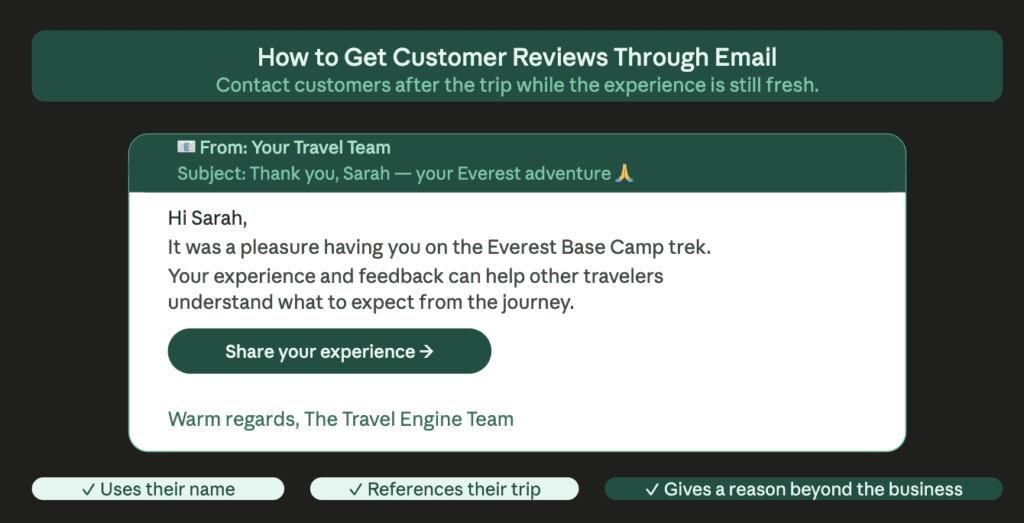
It should feel like a personal thank-you note.
Your customers trusted your travel company with an important experience, so continue that relationship even after the trip ends.
6.1 Create a Personal Review Request Email
A good review email usually includes:
- Thank the customer
- Mention their trip
- Ask about their experience
- Explain why feedback matters
- Add a review link
Keep it simple.
People are more likely to respond to short and friendly messages.
6.2 Customer Review Email Template
Subject: Share Your Travel Experience With Us
Hello [Customer Name],
We hope you are enjoying the memories from your recent trip to [Destination].
Thank you for choosing [Travel Business Name] for your journey. It was a pleasure helping you create your travel experience.
We would love to know how your trip went and what moments you enjoyed the most.
Your feedback helps us improve our services and helps future travelers feel more confident when planning their own adventures.
If you have a few minutes, we would really appreciate you sharing your experience here:
[Review Link]
Thank you again for traveling with us. We hope to welcome you again for another unforgettable journey.
Warm regards,
[Your Name]
6.3 Follow Up Without Being Pushy
Sometimes customers see your email but forget to respond.
A gentle reminder can help.
Do not send too many follow-ups.
One reminder after a few days is usually enough.
Example:
“Hi [Name], we hope you are doing well. We just wanted to thank you again for traveling with us. If you have a moment, we would love to hear your feedback.”
A simple reminder can bring back customers who planned to leave a review but forgot.
7. How to Get Reviews Through WhatsApp and Messaging Apps
Many travel businesses already communicate with customers through messaging apps.
This makes WhatsApp a useful channel for requesting reviews.
Customers often prefer quick and simple communication.

Keep your message:
- Short
- Friendly
- Personal
Avoid sending long paragraphs.
Example:
“Hi [Customer Name], we hope you had an amazing experience during your [Destination] trip. We would love to know how you felt about your journey. Your feedback would mean a lot to us.”
A short personal message often gets better responses.
7.1 Add Direct Review Links
Do not make customers search for your review page.
Add the direct link in your message.
For example:
“Share your experience here: [Review Link]”
The fewer steps required, the higher the chance of receiving reviews.
8. How to Get Customer Reviews Through Social Media
Travel and social media naturally work together.
People love sharing:
- Destination photos
- Adventure moments
- Family memories
- Travel stories
This creates a great opportunity for travel businesses.

Instead of only posting promotional content, create conversations with your customers.
8.1 Share Customer Stories
Customer stories create stronger connections than advertisements.
Share:
- Traveler experiences
- Journey highlights
- Personal moments
For example:
“Meet John, who completed his first Himalayan adventure with our team.”
Real stories help potential customers imagine their own experience.
8.2 Create Review-Friendly Content
Encourage travelers to share their experience through:
- Photos
- Videos
- Testimonials
- Travel memories
When people see other travelers enjoying your service, they become more comfortable trusting your business.
8.3 Use Clear Calls to Action
Many businesses wait for reviews without asking.
Customers often need a reminder.
Use simple messages like:
“Loved your journey with us? Share your experience and help other travelers plan their adventure.”
A clear request increases responses.
9. Add Customer Reviews to Your Travel Website
Your website is one of the most important places to display customer reviews.
Visitors who land on your tour pages are already interested in booking.
At this stage, reviews help remove doubts.

A traveler may wonder:
- Is this company reliable?
- Will I receive support?
- Is the experience worth the price?
Reviews help answer these questions.
Showing real customer experiences on your website can help build more trust with new visitors. For example, travel businesses can showcase customer feedback and success stories to help potential travelers feel more confident before booking.
See this for a better understanding
customer reviews and testimonials
Link:
https://wptravelengine.com/customer-reviews/
9.1 Display Reviews on Tour Pages
Adding reviews near tour details can improve customer confidence.
Useful places include:
- Homepage
- Tour pages
- Booking pages
- Destination pages
A traveler reading about a package feels more confident when they see real experiences from previous customers.
9.2 Use Testimonials to Build Booking Confidence
Testimonials should feel authentic.
Include details like:
- Customer name
- Destination
- Experience
- Favorite part of the trip
Specific reviews feel more trustworthy than general comments.
9.3 Improve the Booking Experience
A smooth booking experience can lead to happier customers.
When customers can easily find tour details, pricing, availability, and booking options, the overall experience improves.
Travel businesses using platforms like WP Travel Engine can organize tours, bookings, and customer journeys more efficiently, helping create a better experience from browsing to booking.
A better customer journey often leads to better feedback.
10. Use Surveys to Collect Better Customer Feedback
Sometimes customers want to share their experience but do not know what to write.
They may think:
“What should I mention?”
“How long should my review be?”
“Which part of the trip should I talk about?”
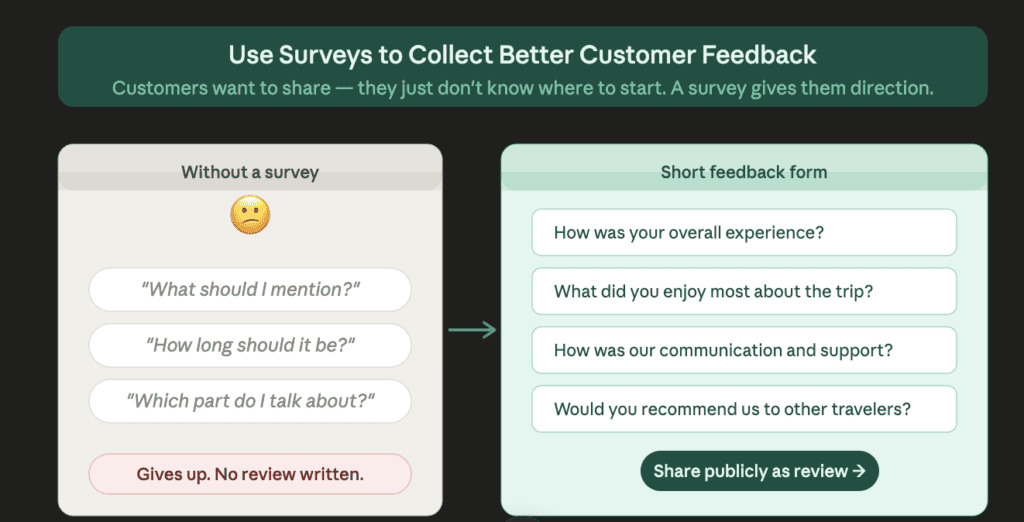
This is where surveys can help.
A short feedback form gives customers a direction and makes it easier for them to share their thoughts.
Instead of simply asking:
“Leave us a review.”
You can first ask:
“How was your overall experience?”
“What did you enjoy most about your trip?”
“How was our communication and support?”
“Would you recommend our service to other travelers?”
These questions help customers remember specific moments.
Once they complete the feedback, you can ask if they would like to share the same experience publicly as a review.
You can also collect structured feedback using tools like Google Forms before encouraging customers to share public reviews.
Link:
Google Forms
https://www.google.com/forms/about/
10.1 Ask the Right Questions
The quality of feedback depends on the questions you ask.
Avoid questions that only need a yes or no answer.
Instead, encourage storytelling.
For example:
Instead of:
“Did you like the trip?”
Ask:
“What was your favorite memory from the journey?”
Instead of:
“Was our service good?”
Ask:
“What part of our service made your experience better?”
Detailed answers can become valuable testimonials.
10.2 Turn Feedback Into Public Reviews
Private feedback is useful, but public reviews help attract new customers.
When a customer shares positive feedback through a survey, encourage them to post it publicly.
Example:
“We are happy to hear that you enjoyed your experience. Would you mind sharing your thoughts as a review? Your feedback can help other travelers.”
This creates a simple path from feedback to reputation building.
11. How to Handle Negative Customer Reviews
No travel business can create a perfect experience for every single customer.
Unexpected situations happen.

A flight delay, weather issue, misunderstanding, or different expectations can affect a traveler’s experience.
A negative review does not always mean your business failed.
What matters is how you respond.
In fact, a professional response to a negative review can build trust because future customers can see how your business handles challenges.
11.1 Respond Quickly and Professionally
Ignoring negative reviews can create a worse impression.
When customers feel unheard, frustration can increase.
A good response should show:
- You noticed their concern
- You appreciate their feedback
- You want to improve
Example:
“Thank you for sharing your experience. We are sorry that your journey did not meet your expectations. We appreciate your feedback and would like the opportunity to understand what happened and improve our service.”
This shows responsibility.
11.2 Avoid Arguments Online
One of the biggest mistakes businesses make is responding emotionally.
Even if you believe the customer is incorrect, arguing publicly can damage your brand image.
Remember:
Your response is not only for that customer.
Future travelers may also read it.
Stay calm, respectful, and solution-focused.
11.3 Use Feedback to Improve Your Service
Negative reviews can provide important lessons.
If multiple customers mention the same problem, it is a sign that something needs attention.
For example:
If travelers mention slow communication, improve response time.
If customers mention unclear information, improve your tour descriptions.
If travelers mention booking difficulties, improve your booking process.
Feedback helps your business become stronger.
12. What to Do When Customers Do Not Leave Reviews
Many travel businesses have happy customers, but still struggle to collect reviews.
This happens because satisfaction does not always lead to action.
A customer may think:
“I will write a review later.”
But later never comes.
The solution is creating a simple follow-up system.
12.1 Create a Review Follow-Up System
Do not depend on customers remembering.
Create a process:
After the trip:
→ Thank the customer
A few days later:
→ Request feedback
After receiving positive feedback:
→ Encourage a public review
Consistency creates better results.
12.2 Use Multiple Review Channels
Different customers prefer different platforms.
Some people leave reviews on Google.
Some prefer TripAdvisor.
Others may share experiences through social media.
Do not depend on only one platform.
A wider review presence helps more travelers discover and trust your business.
13. Common Mistakes Travel Businesses Make When Asking for Reviews
Getting reviews is not only about asking.
The approach matters.

Many businesses lose opportunities because of simple mistakes.
13.1 Sending Generic Review Requests
A message like:
“Please leave us a review.”
feels cold and automated.
Customers receive many similar requests.
Make your message personal.
Mention:
- Their name
- Their destination
- Their journey
A personal message creates a better connection.
13.2 Making the Process Complicated
If customers need too many steps, they may stop.
Avoid:
- Long forms
- Multiple pages
- Confusing instructions
Make reviewing simple.
13.3 Asking Only for Positive Reviews
Do not tell customers:
“Please give us a 5-star review.”
This can feel unnatural.
Instead, ask for honest feedback.
Authentic reviews build stronger trust.
A mix of experiences looks more realistic and believable.
14. How to Use Customer Reviews to Increase Travel Bookings
Collecting reviews is only the first step.
The real value comes when you use them properly.
Many travel businesses collect reviews but do not include them in their marketing strategy.
Your customer experiences can become powerful content.
14.1 Add Reviews to Your Website
Place reviews where customers make decisions.
Good locations include:
- Tour pages
- Homepage
- Booking sections
- Destination pages
When visitors see positive experiences while considering a trip, it can increase confidence.
14.2 Share Reviews on Social Media
A customer review can become engaging content.
Turn reviews into:
- Instagram posts
- Facebook stories
- Travel videos
- Customer highlight posts
Real experiences often attract more attention than promotional posts.
14.3 Use Reviews as Marketing Content
Customer feedback can support:
- Email campaigns
- Advertisements
- Blog content
- Landing pages
A traveler explaining why they enjoyed your service can influence future customers.
15. Final Thoughts: Turn Happy Travelers Into Your Best Marketing Channel
Customer reviews can become one of the strongest growth tools for your travel business.
Travelers want confidence before making a booking decision.
They want to know that another person has already experienced your service and had a positive journey.
That is why reviews matter.
The key is not simply asking customers to write something.
It is about creating memorable experiences, building relationships, and making the process easy.
A successful review strategy includes:
- Providing great service
- Asking at the right time
- Making reviews simple to leave
- Responding professionally
- Using feedback to improve
Your travelers already have stories.
Your job is to create a simple way for them to share those stories.
Over time, those reviews can build trust, improve your reputation, and help more people choose your travel business.
When happy customers share their experiences, they become one of your most powerful marketing channels.
And every positive story has the potential to bring your next traveler closer to booking.


Great tips. thanks for the information